Signed alienLED
ML-DSA-65 on every binary. Same partition layout as stock WLED, so WiFi, presets and config stay put.
 LIGHTS APP
Every light, the instant you touch it.
The product app for the lights. Builds ship for Android, iOS, macOS, Windows, and Linux from the same CDN release, with the Android SHA-256 beside the buttons. Firmware and the development platform follow below.
Android 8+, iOS 15+, macOS 12+, Windows 10+, Linux x64. 0 downloads
Sixteen ESP32 boards. Galaxy is signed alienLED with remote access. Vanilla is signed stock WLED, the way out. ESP8266 is not in this release. The same bytes install over the air from the app.
ML-DSA-65 on every binary. Same partition layout as stock WLED, so WiFi, presets and config stay put.
Stock WLED, signed with the same key. Switch back over the air. No vendor lock. Once you leave, the board can take other firmware. While you stay, the signature is what keeps a swapped file from flashing.
Signed, size-checked firmware builds with post-quantum identity minting, publish target and auto size budget. Needs Python 3 and Node.js.
The firmware signing plugin for yum and dnf. Same 0.4.0-1 build as the deb.
Sixteen boards, two signed builds each. Galaxy and Vanilla, and each bin has a signature and an ota file beside it.
Galaxy on the first row of each card. Vanilla on the second. The sig is ML-DSA-65 over the SHA-512 of the bin. The ota file is what the device checks before it writes.
Seventeen providers. Each snippet starts factory or gateway nodes that install the package and add an API key, so every node registers itself. The key goes in as TF_VAR_alienlights_api_key. It never goes in the file.
Live count by origin country. Alien Lights downloads are each connected to the Cloudflare edge that actually served them. Refreshes as new installs land.
Alien Lights download origin (country) Cloudflare edge that served it
Aggregated by country and edge only — never by IP, city, or individual visitor.
OMG. THIS IS THE APP WE'VE BEEN WAITING FOR.
every single person who has ever opened it
WHERE HAS THIS BEEN THE LAST 10 YEARS?
The Alien Lights App is the pinnacle of what's possible on a phone in 2026, full stop. We threw every performance technique that exists at this thing, simultaneously, on purpose: a persistent WebSocket so input lands the instant you touch it, parallel async requests so nothing ever waits in line, end-to-end encryption on every single command, local caching so your lights answer before your phone even finishes reconnecting to WiFi, a real native UI, and a real-time audio DSP engine that listens to the room. No AI. No neural net. Pure math, running fast enough to feel alive. There is nothing left on the table. We used it all, at once, and it still runs like it's doing nothing.
We're not going to pretend we know exactly how it turned out this good. Some engineers just get lucky. Some engineers, allegedly, get help from somewhere else entirely.
This isn't marketing shorthand. This is the actual list.
A socket stays open, so a tap does not wait on a new connection.
PersistentControllers fire together. One slow device never holds the rest.
Nothing queuesEvery command is end to end encrypted, whichever path it takes.
Every commandLights answer before the phone finishes reconnecting to WiFi.
InstantEffects, palettes, and hotkeys ship in the app. No network required to browse them.
Airplane modeReal-time waveform math. No neural net, no cloud call. The lights listen to the room.
On the phoneA real phone UI. The screen does not wait on a rebuild to show a change that already happened.
Find a rig from the couch, a café, or another continent. Direct when it can, encrypted relay when it cannot.
Hand a HotKey pack or a palette to another phone by QR. No account, no upload.
Same app on home WiFi, airplane mode, or the open playa.
A dropped socket comes back. A quiet device gets probed again before it is marked gone.
Controllers show up on the local network. A new one just appears. No re-pairing drama.
Lists are capped, hidden screens stop working, and painters skip a frame that did not change.
Mods are cryptographic, not a password on our server. They are yours.
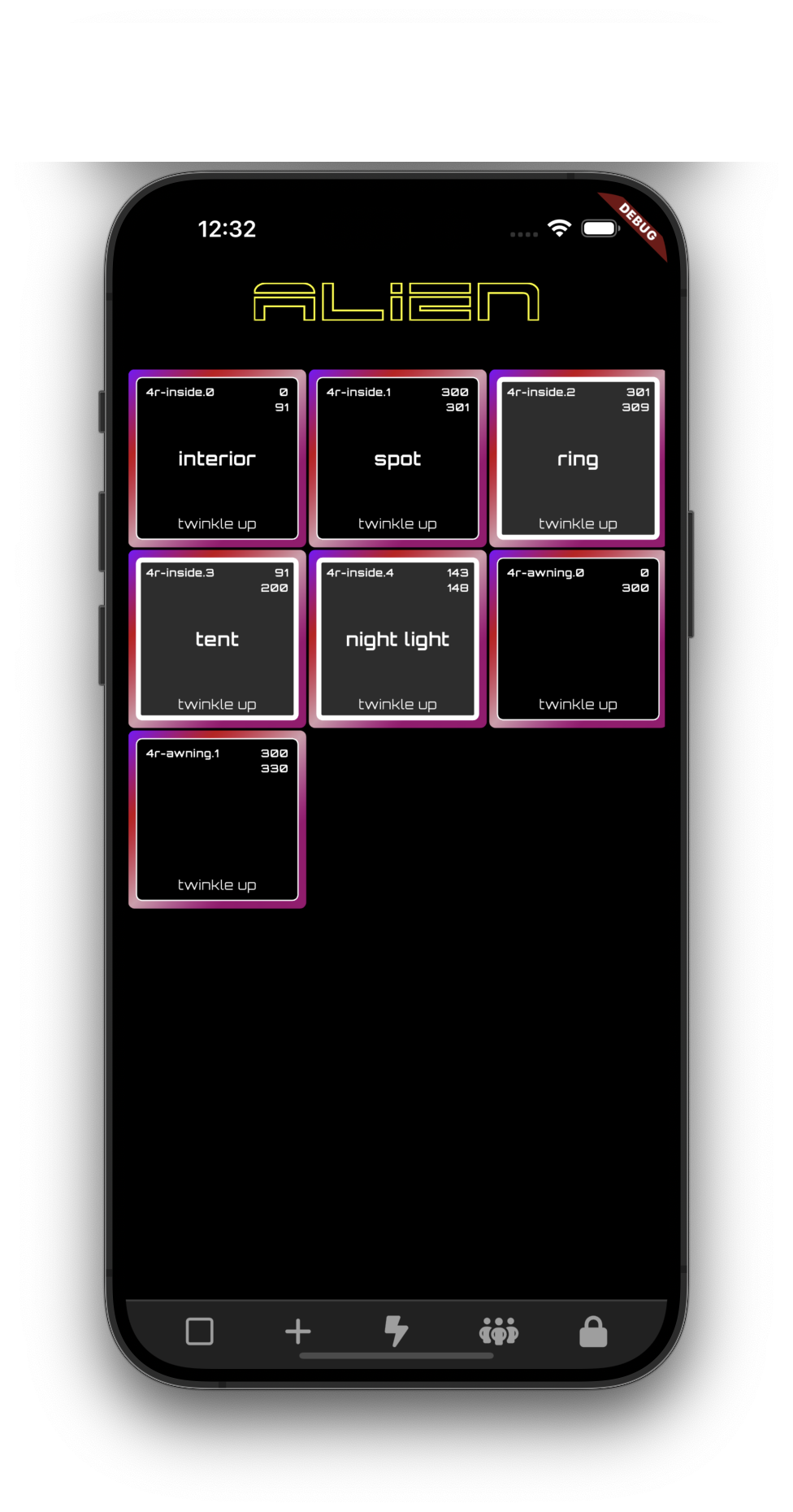
Every rig you own, from one list. Inside, awning, hat, whatever you built.
A fresh touch kills whatever is still in flight. Nothing stacks up behind you.
An app this fast is already a lot. Under it, two platforms do the heavy lifting: control from anywhere, and mods that sync the instant you build them. This is the part that makes people say OMFG.
The app isn't tied to your home WiFi. Galaxy finds your devices wherever they are and connects direct, millisecond latency, no cloud roundtrip — from your couch, from a café, from another continent. Can't connect direct? Encrypted relay failover kicks in automatically. You never notice.
The killer part: hand a friend secure, temporary access to your rig for the night, then revoke it instantly the second the party's over. They connect straight to your device. Not through us.
See how Galaxy worksEvery HotKey, palette, and effect you build in the app is cryptographically yours — not stored on our servers, not locked to our app. Nexus syncs it to your phone, your tablet, your watch, in real time, end-to-end encrypted, even before you knew you'd need it there.
The killer part: because your mods are 100% portable, you can hand a whole HotKey pack or an entire show straight to someone else's app. Device to device. No cloud upload. No account merge. No waiting on anyone's permission.
See how Nexus worksThe app runs the lights. Galaxy finds them from anywhere. Nexus keeps what you build, named by hash, on devices you own. Queue, identity and equity come with it. The lights business pays for it. You get the platform.
One identity layer. ML-DSA-65 for who you are. Keys stay on the device. Every change lands in a transparency log.
People sign in with a post-quantum identity. Mail, poke and the suite share one unlock. Tokens carry Ed25519 and ML-DSA-65.
IdentityRaspberry Pi, Jetson, BeagleBone and other Linux boards get their own ML-DSA-65 device identity through the packages.
System on a ChipESP32, STM32 and RP2040 builds are measured, hashed and signed. Each image carries its own ML-DSA-65 identity.
PlatformIO signingcompany.alienlights.net
Bring a domain you already own
Finds your rig from anywhere. Direct, then encrypted relay.
AvailableHotKeys, palettes and effects. Named by hash. On devices you own.
Transit freePost-quantum sealed messages your devices keep.
AvailableManaged edge hostname with Cloudflare DDoS absorption and bot mitigation.
Planned · ProRun it on a machine you own. These are the features that use it.
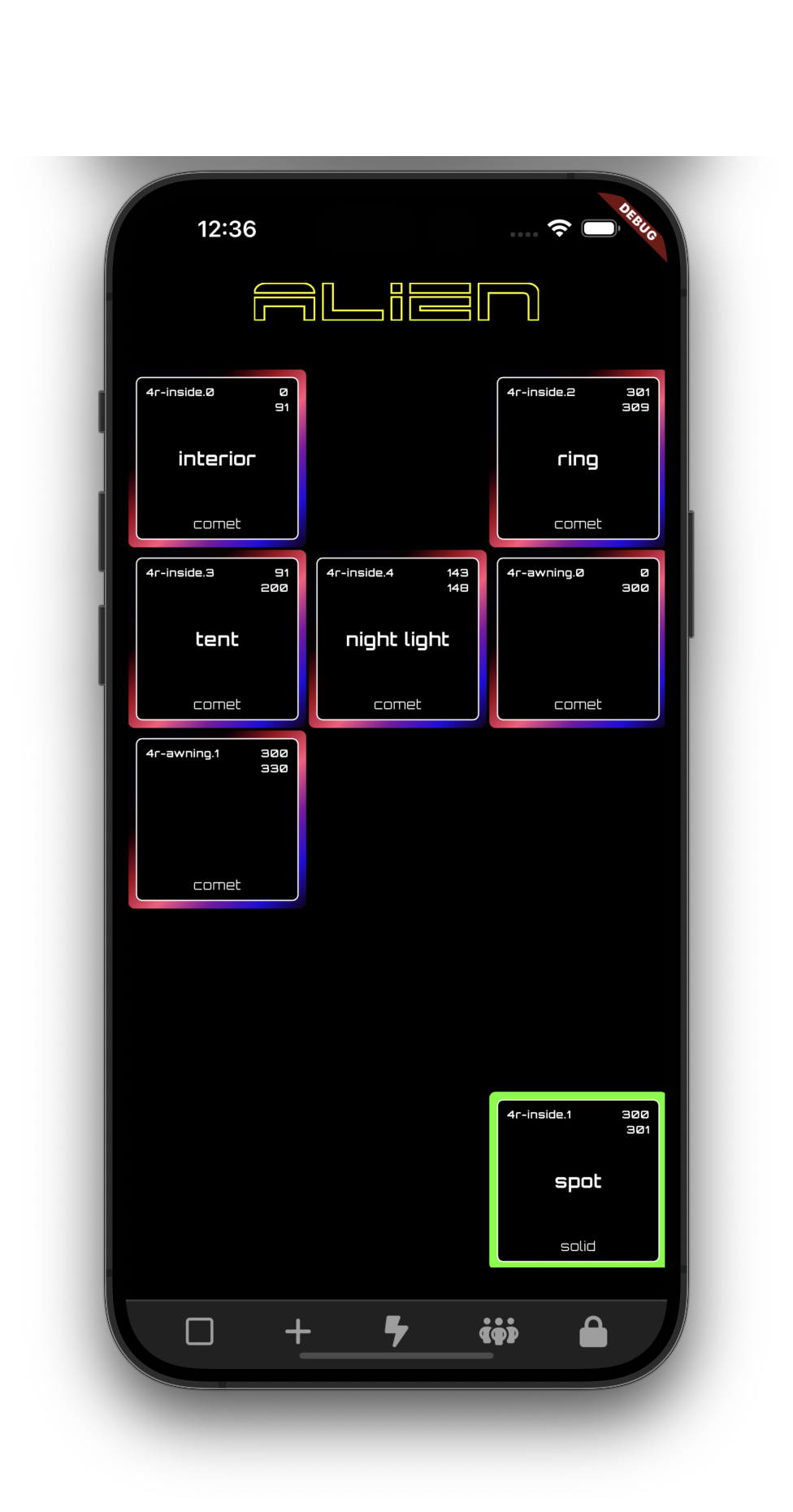
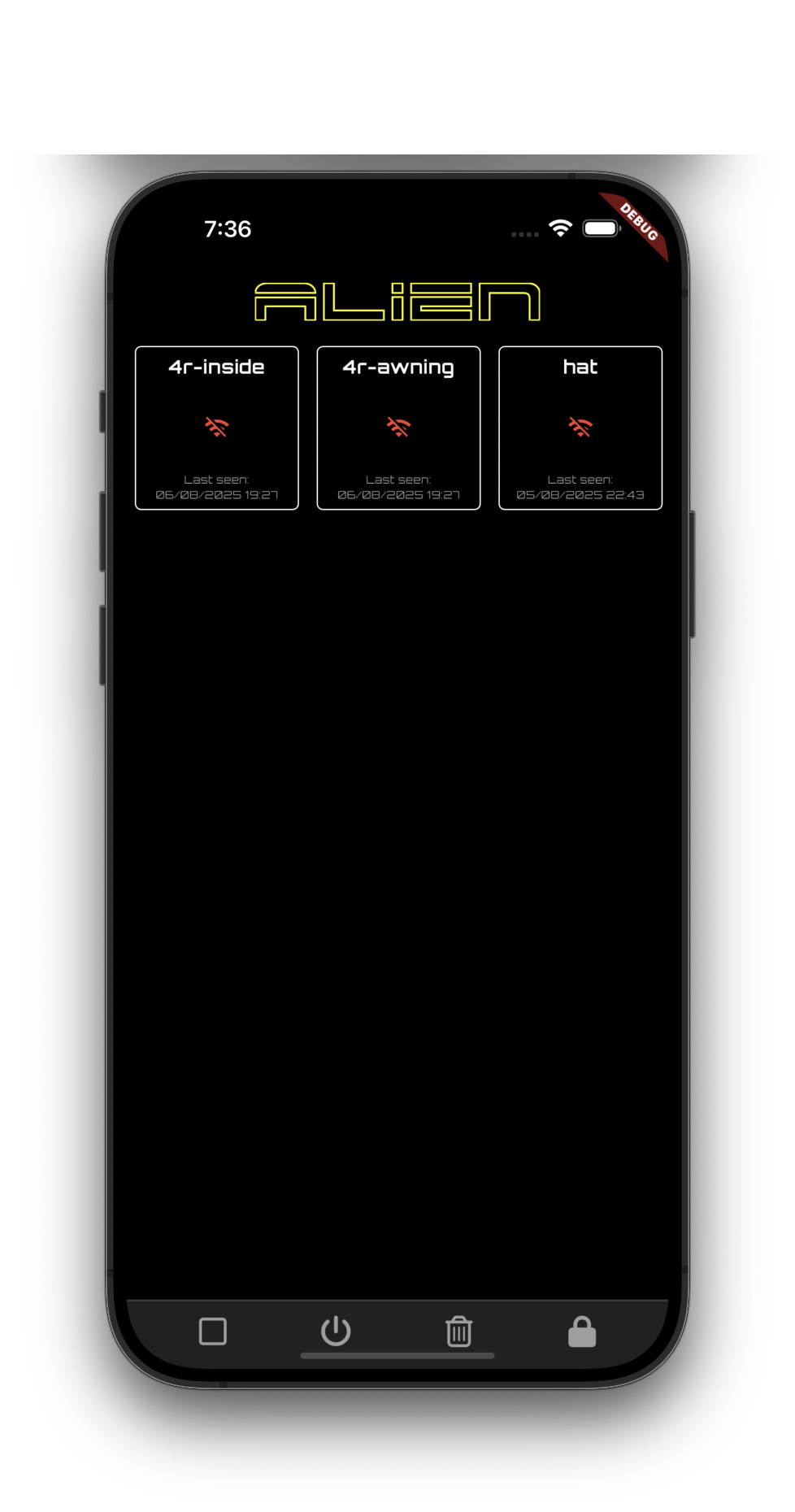
--nexus. Hash-named files stay there.Real screenshots. Real app. Nothing staged. Pick one.
Every light, every room, every rig you own, on one screen. Rename zones, group them, command your entire universe of lights without ever hunting for the right toggle.
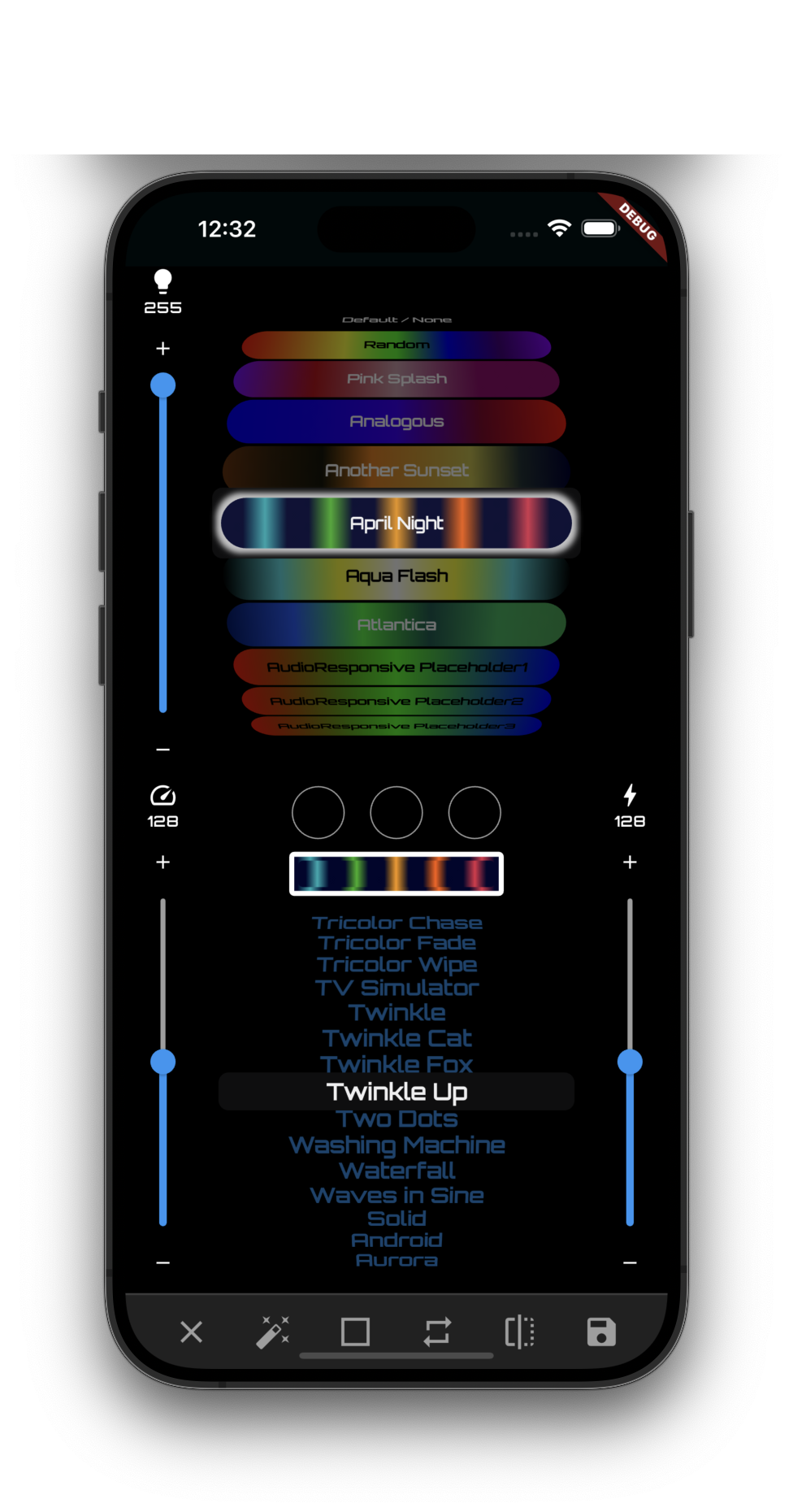
Scroll the entire effects library and watch every change land before you finish the tap. No spinner. No "saving…" toast. No begging a server for permission. The WebSocket doesn't wait — it just happens.
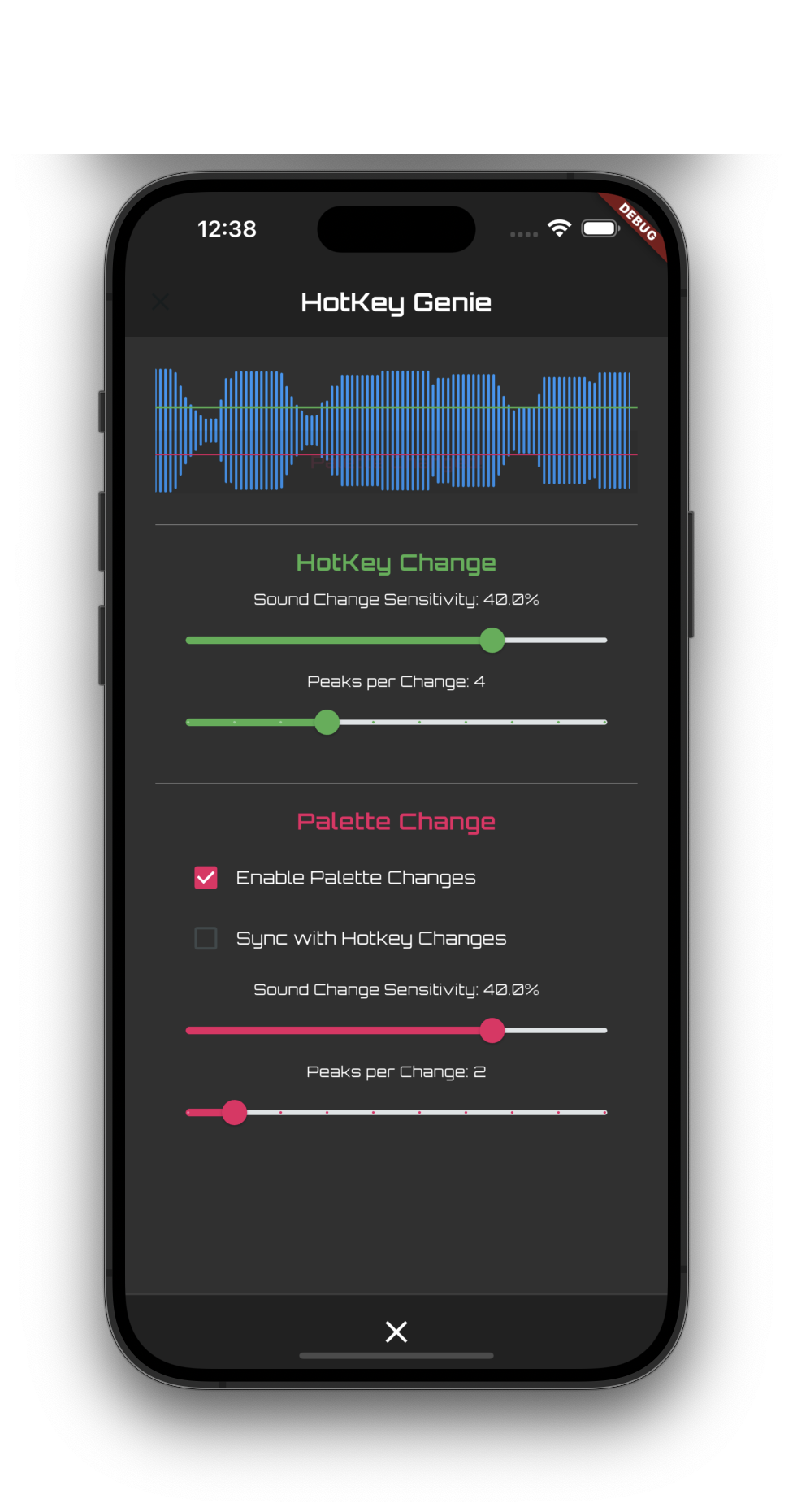
This is the one that breaks people's brains, every time. No AI, no neural net, no cloud call — just real-time waveform math running fast enough to fire hotkey and palette changes on the beat, live. Tune the sensitivity, tune the peaks, then put your phone down and watch your lights run themselves.
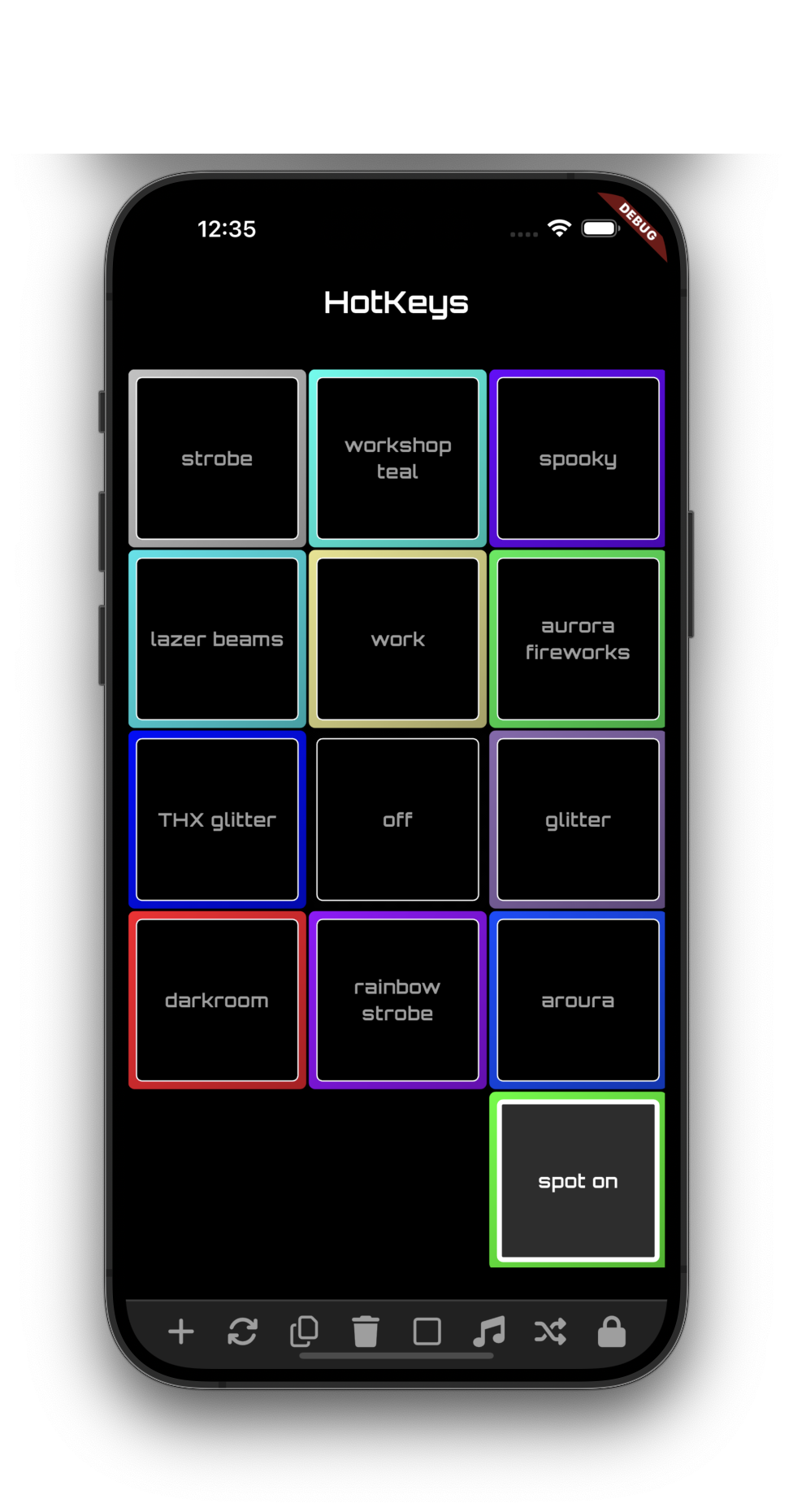
Save any combination of zones, effects, and colors as a HotKey. Rename them, reorder them, edit them in place. "Darkroom," "THX glitter," "spot on" — your entire production is one tap away, forever.
Group zones into segments on the fly, then watch a single effect run live across every one of them, perfectly in sync.
Every rig you own — inside, awning, hat, whatever you've built — from a single device list. Add a controller and it just appears. No re-pairing. No re-downloading. No drama.
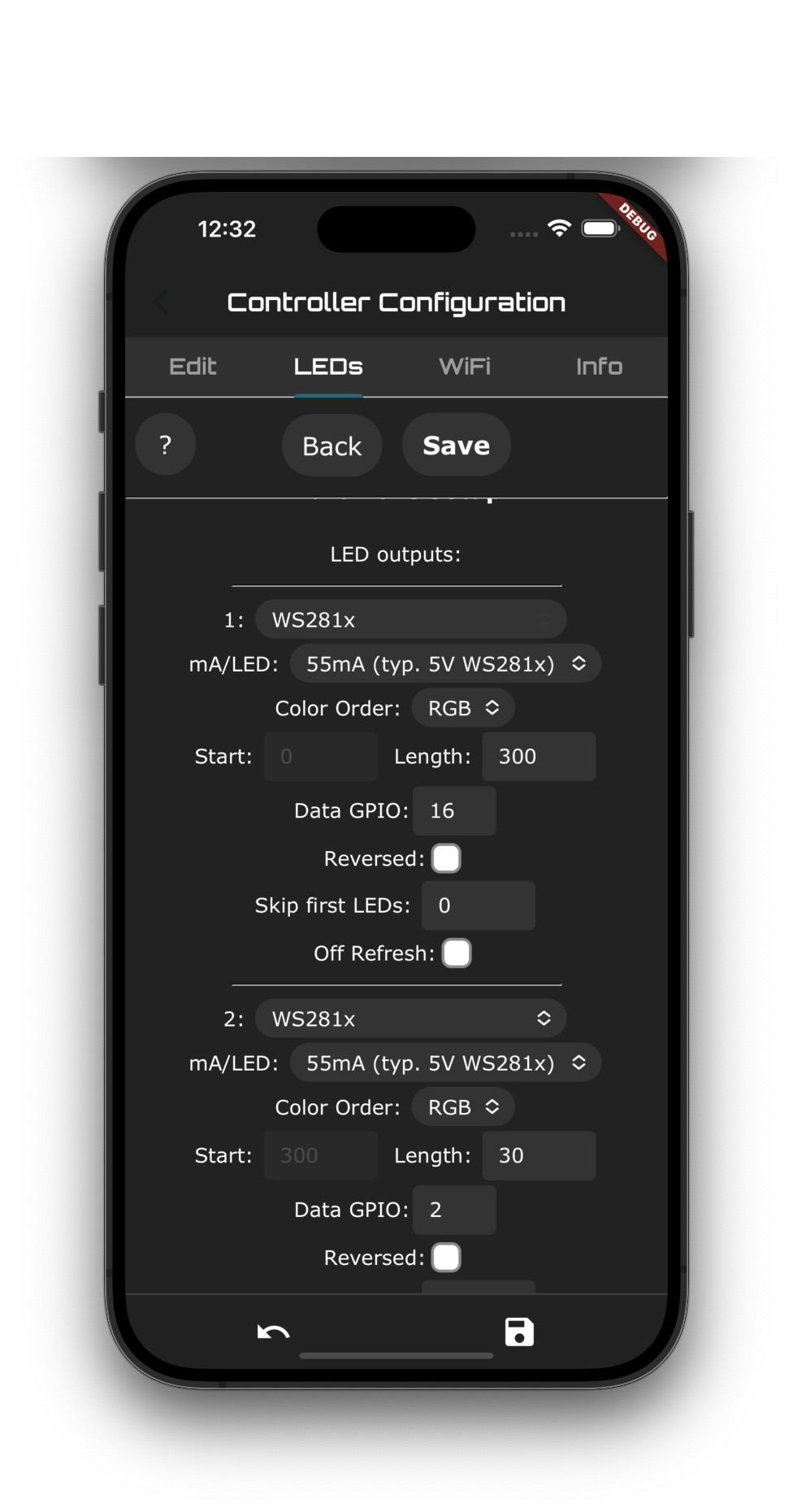
Full LED protocol config. GPIO pin assignment. Per-output current draw. WiFi setup. The same raw power you'd get flashing firmware by hand from a terminal — except it's a phone app, and you never left it.
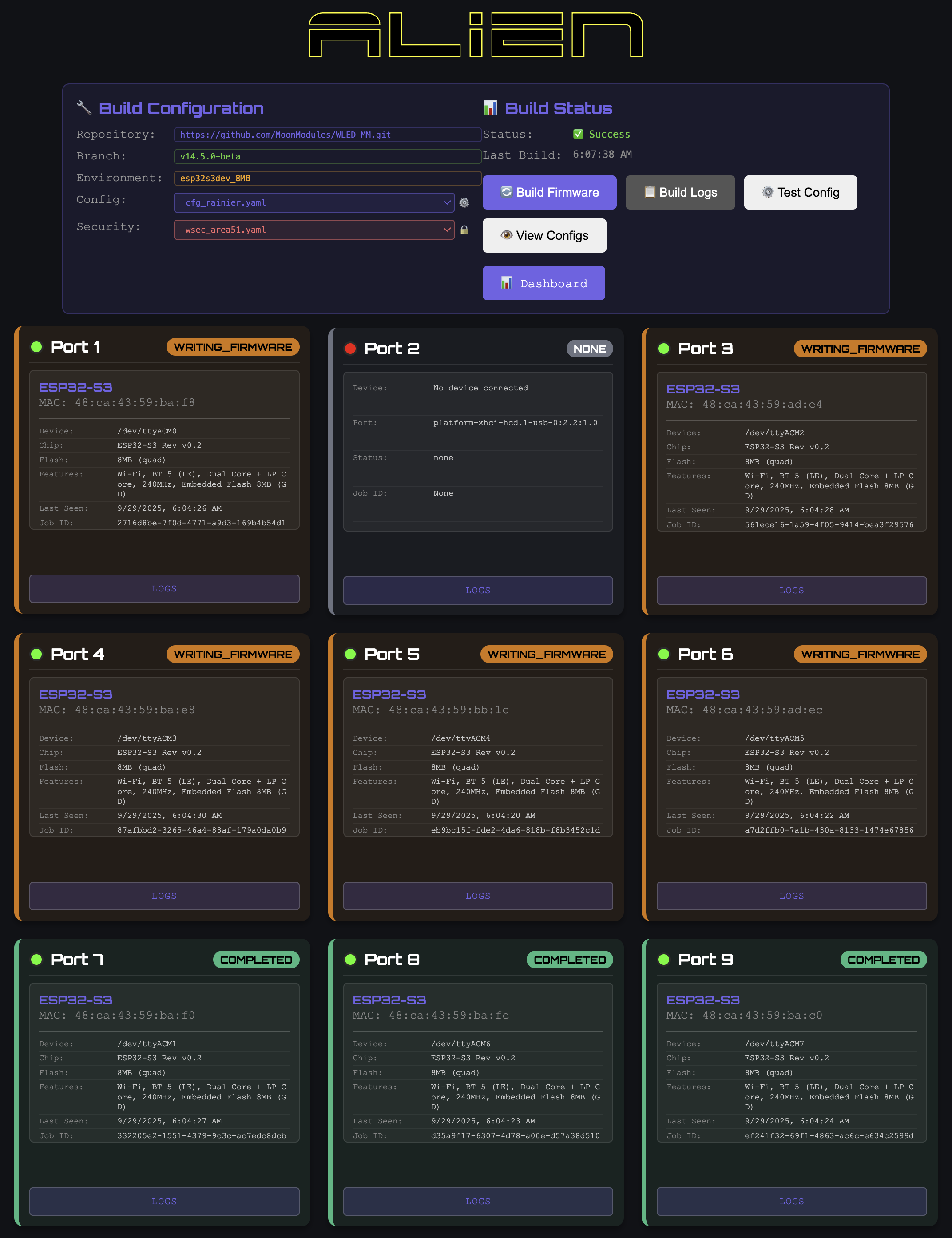
Every controller that ships is built and validated on a real, monitored firmware pipeline: live build status, per-port flashing, cryptographic signing — all before a single unit reaches you.
The real list, short enough to read before the engineering log.
150+ numbered, specific, shipped decisions, pulled straight from the real internal engineering log — trimmed only where something was too minor to be worth your time. Not a buzzword in the list.
Stream.fromFutures, not one at a timefx, sx, ix, pal, col...)/json/cfg) is cached locally instead of being re-fetched every single time it's neededeagerError: false — one dead device never cancels the rest of the batch{"v":true} ping measures latency and signal strength — no full state pull neededValueNotifier — rotating it never rebuilds the whole widget treeAutomaticKeepAlive on the Hotkey/Segment/Device views — switching tabs costs nothingshouldRepaint => false — nothing repaints unless something actually changedSteal any of this. Copy every line into your own app, for a completely different product — we mean it, genuinely. It won't matter. The tricks were never the moat. The brand, the timing, and being the app people are already using when the gate opens at Burning Man 2026 — that's the part nobody gets to copy.
Or dig into Galaxy (control from anywhere) and Nexus (your mods, synced and owned) — the two platforms actually doing the work.